
Arctic Drive Beginner Guide: Your First 20 Minutes
A practical Arctic Drive opening route: what to load, how to keep the truck alive, and where to spend the first night before the cold sets in.
Quick answer: Spend the first 20 minutes making the truck livable, not looting every shelf. Install the battery, keep one jerrycan and one repair kit, load heavy cargo low, then drive to the nearest cabin before dark. Drop decorations and empty boxes first; they cost fuel and buy you nothing.
The opening is a packing problem disguised as a driving game. Your truck is the shelter, the storage locker and the only way out, so every kilogram you add is a kilogram the engine has to pull through snow. The hauling and fuel guide→ covers the math in detail; this page is the 20-minute version you can run while the engine is warming up.
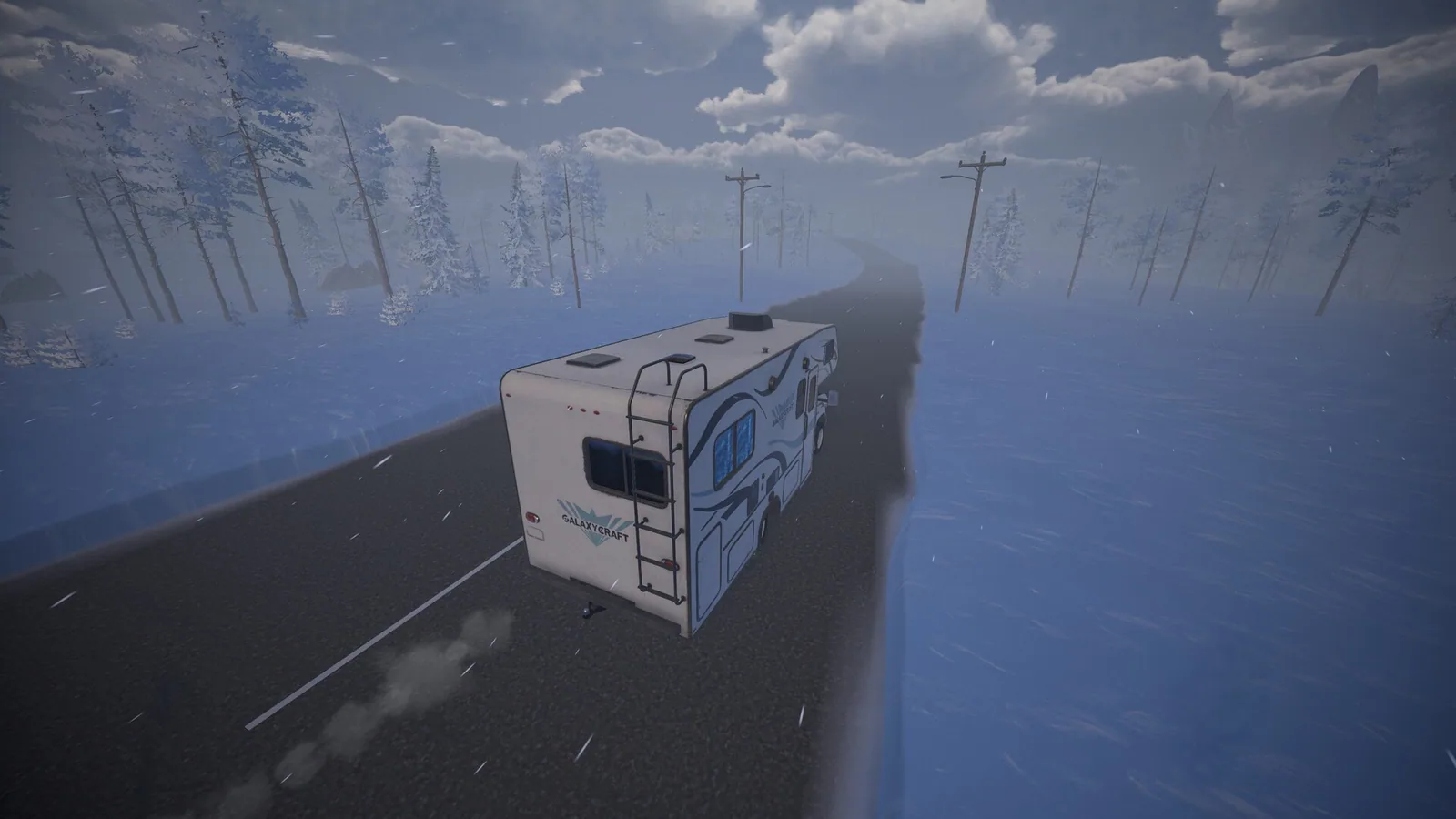
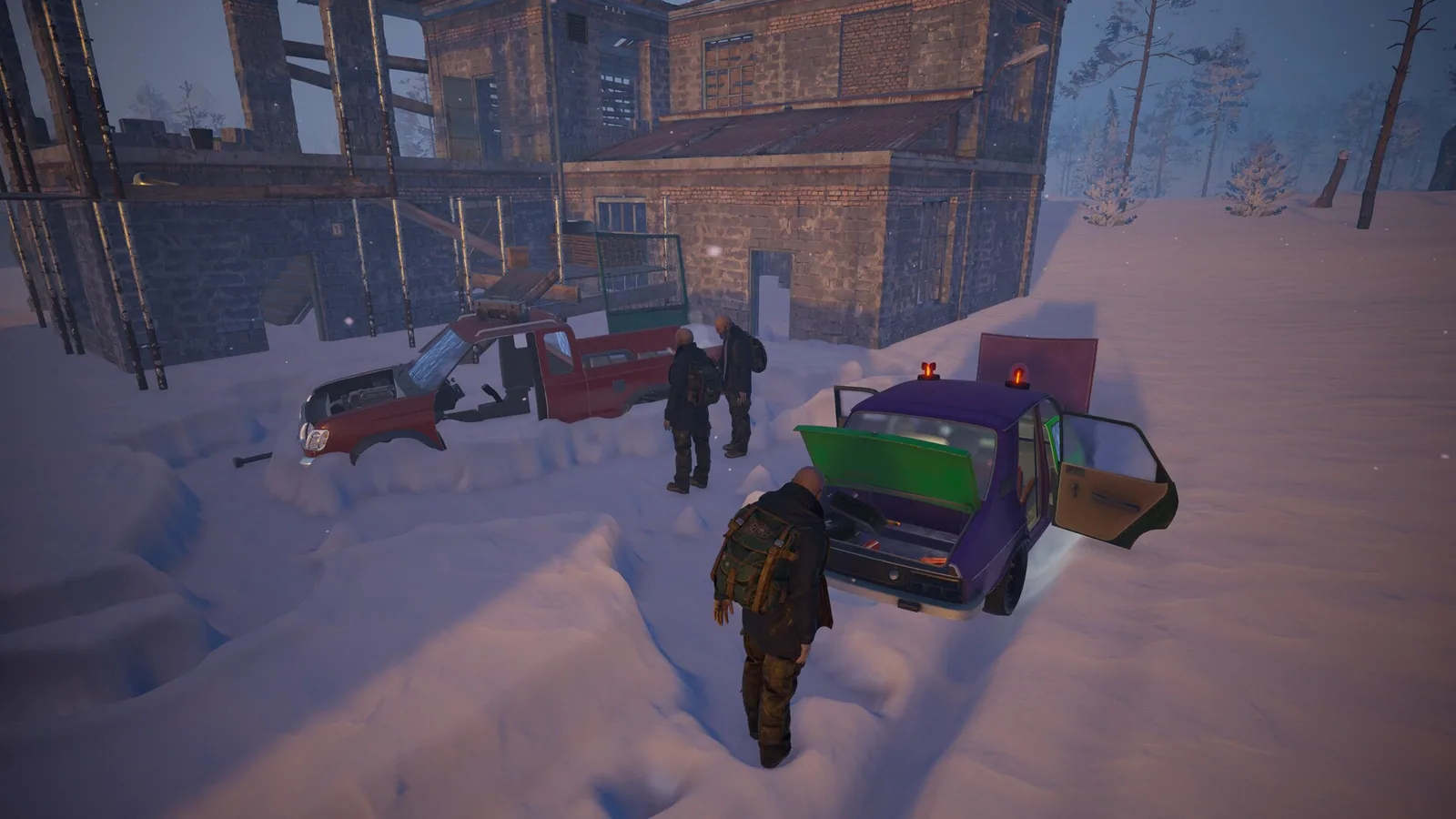
What should you put in the truck before you leave?
Load for the first night, not for a theoretical week. The truck has a battery slot, a fuel tank, a cargo bed and a cab; the cab is also your warm space, so do not turn it into a warehouse.
If a part does break, the repair priority guide→ tells you what to fix before you spend scrap.
| Item | How many | Where | Why it earns its weight |
|---|---|---|---|
| Car battery | 1, installed | Engine bay | The engine will not start without one; a spare is dead weight until you need it |
| Jerrycan | 1-2 | Trunk or bed, upright | One can is your reserve; two only if you are towing or leaving the main road |
| Repair kit | 1 | Cab or trunk | Fixes the part that decides whether you drive home |
| Torch | 1 | Cab | Night repairs and salvage without burning your headlights |
| Food and water | 2 days | Cab | Hunger and thirst tick down while you drive |
| Warm clothing | 1 spare set | Cab | Body temperature drops faster when you are wet |
| Sledgehammer | 1 | Bed | Removes parts from donor cars instead of leaving them behind |
The battery is the item new players forget. If the engine turns over and dies, or the dash stays dark, check the battery before draining the tank.
How should you load the truck in the first hour?
Put the heaviest single items on the floor of the bed or trunk, directly over the rear axle. Put lighter boxes on the back seat, and keep jerrycans upright in the trunk where they cannot slide into the cab. Close the tailgate before you move; loose cargo shifts under braking and can spill on a tight turn.
The official store page is blunt: weight burns fuel faster, and tight turns can spill the haul. Leave one empty seat and floor space for a repair kit or a food box.
Carry the first load only as far as your first shelter. Unload what you need for the night, then repack in daylight when you can see what you actually have.
Where should you spend the first night?
A cabin with a stove is the best first-night shelter. It gives you heat, a place to dry out and a save point that does not depend on fuel. A garage or stash room with a generator is the second choice; it is warmer than the cab and usually has a workbench nearby. The truck is the fallback, not the plan.
Drive to the shelter while you still have daylight. Park nose-out, close to the door, and leave the driver's side clear. If the cabin has a generator, start it before you unload so the lights and heat are already running. Then bring in food, water, one repair kit and your bedroll, and leave the rest locked in the truck.
Do not sleep through a whiteout in an unheated cab. The game tracks body temperature and hypothermia; get to heat first and sort inventory second.
What can you throw away immediately?
Throw away anything bulky with no mechanical job: decorative items, duplicate broken parts, empty boxes and low-value clutter that came with the truck. Empty boxes are recyclable, so if a recycler is close, turn them into materials instead of carrying them for 20 km. Broken parts are also recyclable, but keep one spare of the part that strands you most often.
| Toss or recycle | Keep |
|---|---|
| Decorations and posters | Repair kit and torch |
| Empty boxes and packaging | Jerrycan and fuel |
| Duplicate broken parts | One spare tire or wheel |
| Low-value bulky loot | Food, water, warm clothes |
| Extra mirrors and trim | Battery, oil, sledgehammer |
What does a good 20-minute route look like?
| Time | Action | Why |
|---|---|---|
| 0-3 min | Install battery, check oil and fuel, take one jerrycan | Prevents the most common dead-on-arrival start |
| 3-8 min | Load heavy items low, close the tailgate, clear the cab | Keeps the truck stable and the cab warm |
| 8-15 min | Drive to the nearest cabin or garage, looting only fuel, food and tools | Daylight is for travel, not shelf-by-shelf clearing |
| 15-20 min | Park nose-out, start heat, unload the night kit, save | Ends the first day with a safe respawn point |
If the cabin is farther than your reserve allows, stop at a gas station first. Stations carry jerrycans, and parked cars can be siphoned. Do not push a 25 km route on a quarter tank.
What should you do on night one?
- Park facing the exit and set the handbrake.
- Start the generator or stove before unloading.
- Bring in food, water, one repair kit and warm clothes.
- Repair the part that is closest to failing, not the cosmetic damage.
- Check the map for the next fuel stop and mark the route you will drive at first light.
- Save, then sleep.
FAQ
Can you play the first night without a cabin?
Yes, but you need the cabin heater and a parking spot out of the wind. Keep the engine off while you sleep unless you have a reason to run it, and check the temperature bar before you lie down.
Should you take the trailer on day one?
No. A trailer doubles the number of things that can go wrong before you have a repair kit, a spare and a known route. Hook one up after your first full fuel run.
Sources and version notes
Official source: Arctic Drive on Steam ↗ — the store page describes the truck as shelter, storage and the only way out, and confirms that weight burns fuel faster.
- Arctic Drive official site ↗ — game overview and feature list.
- Steam launch news and patch notes ↗ — v0.23.0 and v0.23.2 changes, including the launch build.
- Arctic Drive on Steam ↗ — system requirements and store features.